
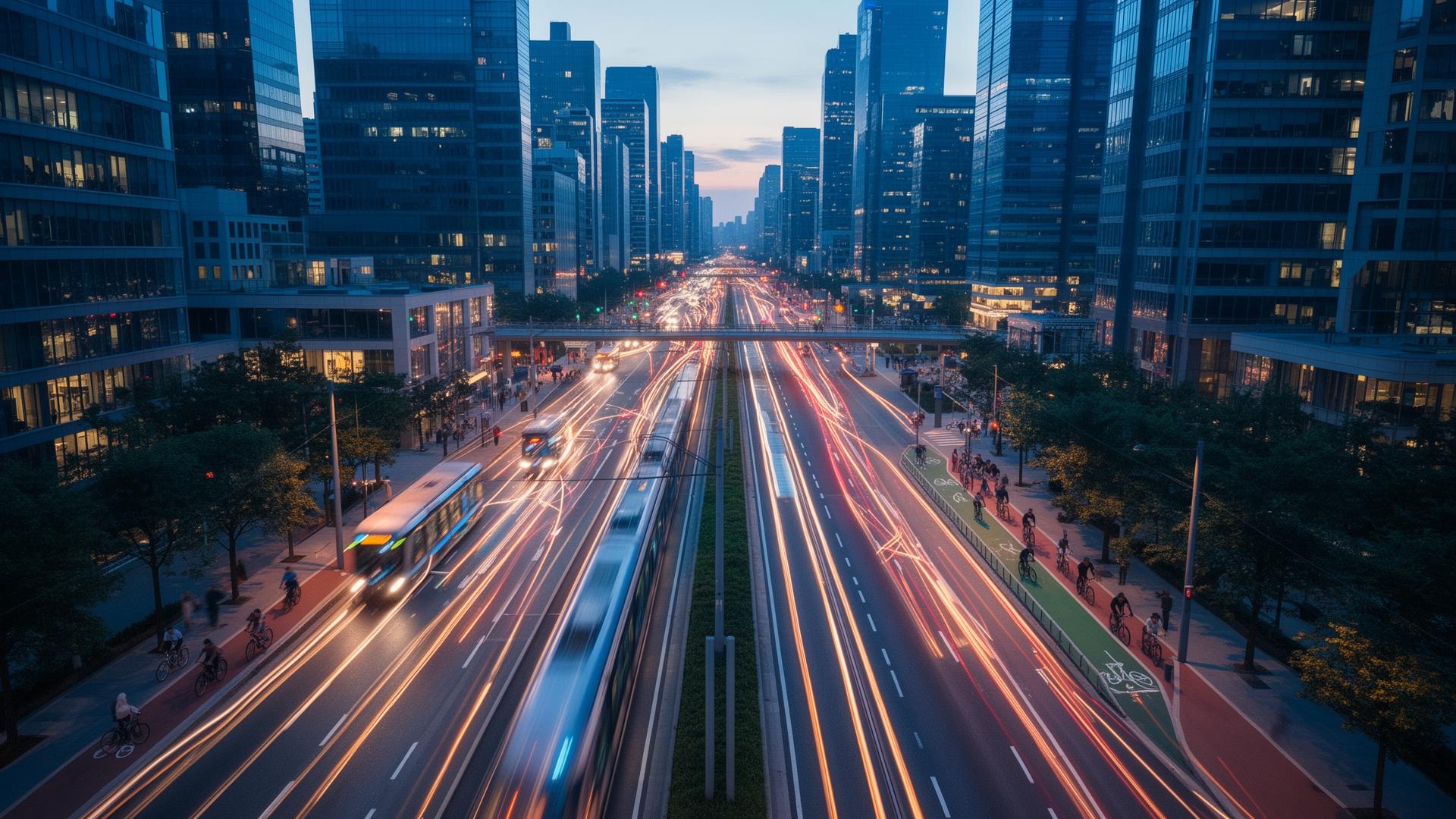
The Evolution of Urban Mobility
When people think about the future of transportation, they often imagine flying taxis, autonomous vehicles, or futuristic hyperloops.
But the reality is that some of the world's most innovative transport solutions are already operating today.
From Singapore's data-driven transport network to London's contactless payment revolution, cities around the world are quietly transforming how millions of people move every day.
The most successful cities are not necessarily building entirely new transport systems. Instead, they are making existing systems smarter, more connected, and easier to use.
As urban populations continue to grow, these lessons are becoming increasingly important for cities everywhere.
Singapore: Turning Data Into Better Mobility
Few cities have embraced transport technology as comprehensively as Singapore.
The city-state has invested heavily in intelligent transport systems that collect and analyse vast amounts of mobility data in real time. This information helps authorities optimise traffic flow, improve public transport services and better understand how people move throughout the city.
Rather than reacting to congestion after it occurs, Singapore increasingly uses predictive insights to anticipate problems before they happen.
The result is a transport system that is constantly learning and adapting.
For residents, much of this technology remains invisible. Yet it plays a critical role in making journeys more reliable and efficient.
London: The Power of Simplicity
One of the most influential transport innovations of the past two decades did not involve artificial intelligence or autonomous vehicles.
It involved removing the need to buy a ticket.
When London introduced contactless payment across its transport network, it fundamentally changed how people interacted with public transport.
Passengers no longer needed to plan ahead, queue for tickets or understand complex fare structures. They could simply tap and travel.
What appeared to be a small change had a significant impact on user experience.
London demonstrated an important principle that many cities now recognise:
The best transport technology often removes complexity rather than adding features.
Copenhagen: Designing Cities Around People
While technology plays a major role in modern mobility, infrastructure remains equally important.
Copenhagen has become globally recognised for creating a city where cycling is not merely encouraged—it is integrated into everyday life.
Dedicated cycling infrastructure, connected transport networks and long-term urban planning have helped make active travel one of the most practical ways to move around the city.
The lesson from Copenhagen is clear.
Smart mobility is not just about apps and technology. It is about designing cities that give people meaningful transport choices.
Seoul: A Connected Mobility Ecosystem
South Korea's capital has emerged as one of the most digitally connected cities in the world.
Seoul's transport network integrates buses, metro services and mobility information through highly accessible digital platforms.
Real-time information allows travellers to make informed decisions, while integrated systems create a smoother experience across different modes of transport.
The city continues to invest in smart mobility technologies that improve convenience while supporting sustainability goals.
Its success highlights the growing importance of connectivity in urban transportation.
The Common Thread
Despite their differences, the world's most innovative transport cities share several characteristics.
- They prioritise convenience.
- They invest in digital infrastructure.
- They make sustainable transport options more accessible.
- And perhaps most importantly, they focus on the traveller rather than the transport operator.
Technology is not deployed for its own sake. It is used to remove friction from everyday journeys.
Why This Matters
By 2050, nearly 70% of the world's population is expected to live in urban areas.
This growth will place increasing pressure on transport networks, infrastructure and public services.
Cities cannot simply build their way out of congestion challenges. They must also become smarter in how they manage mobility.
The experiences of Singapore, London, Copenhagen and Seoul demonstrate that meaningful improvements are already possible today.
The future of transport is not defined by a single breakthrough technology.
It is defined by thousands of small improvements that collectively make urban mobility easier, more sustainable and more accessible.
The cities leading this transformation are showing the rest of the world what is possible.
The question is not whether transport will become smarter.
It is how quickly other cities can learn from those already leading the way.
Sources & Further Reading
- World Economic Forum — Future of Mobility and Smart Cities research
- Land Transport Authority Singapore
- Transport for London (TfL)
- Smart City Seoul Initiative
- Copenhagenize Index and City of Copenhagen Mobility Reports
- International Transport Forum (OECD)