
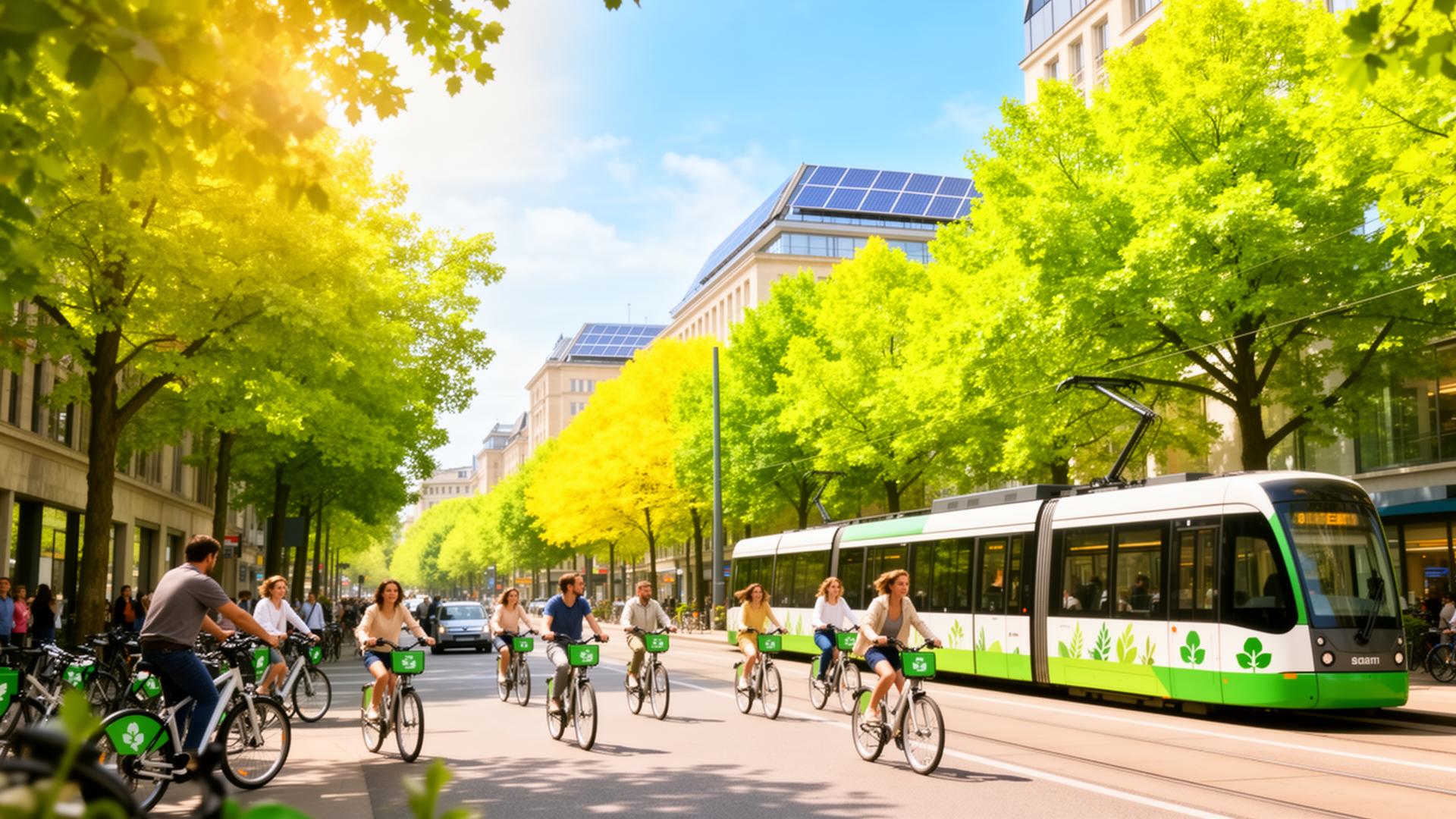
The Balancing Act Facing Cities
Cities around the world are facing a difficult balancing act.
Urban populations continue to grow, demand for transportation is increasing, and governments are under mounting pressure to reduce carbon emissions. At the same time, traffic congestion remains a costly and persistent challenge, impacting productivity, air quality and quality of life.
For decades, the private car has been at the centre of urban transportation. While cars provide flexibility and convenience, widespread dependence on private vehicles has created challenges that many cities are now struggling to address.
As a result, city planners, transport authorities and policymakers are increasingly looking towards a concept known as modal shift — encouraging people to move away from private car use and towards more sustainable transport options.
At the heart of this transition is shared mobility.
The Cost of Car Dependency
Private vehicles have shaped cities for generations.
Road networks, parking infrastructure and urban development patterns have often been designed around the assumption that most people will travel by car.
Yet despite their importance, private vehicles are not always an efficient use of urban space.
Research frequently cited by urban mobility organisations suggests that private cars spend the vast majority of their lifespan parked rather than in use. Meanwhile, roads become increasingly congested during peak travel periods, creating delays that affect businesses, commuters and public transport services alike.
The environmental impact is equally significant.
According to the International Energy Agency, transportation remains one of the largest contributors to global carbon emissions, with road transport accounting for a substantial share of that total.
Reducing car dependency has therefore become a major objective for cities pursuing sustainability targets.
Understanding Modal Shift
Modal shift refers to the movement of travellers from one mode of transport to another.
In practice, this means encouraging people to replace some private car journeys with alternatives such as:
- Public transport
- Walking
- Cycling
- Shared bikes
- Shared scooters
- Car-sharing services
- Ride-sharing solutions
The goal is not necessarily to eliminate private vehicle ownership entirely.
Instead, it is about creating viable alternatives that allow people to choose the most appropriate transport option for each journey.
When alternatives become convenient, accessible and reliable, behavioural change becomes far more achievable.
Lessons from Leading Cities
Several cities have become global examples of successful modal shift strategies.
In Copenhagen, extensive cycling infrastructure has helped make active travel a practical and attractive choice for daily commuting. The city has invested consistently in safe cycling routes, helping to reduce reliance on private vehicles while improving public health outcomes.
In Amsterdam, integrated transport planning has combined cycling, public transport and shared mobility services into a highly connected urban ecosystem.
Meanwhile, cities such as Helsinki have explored Mobility as a Service initiatives that allow users to access multiple transport modes through a single platform, making sustainable travel options easier to discover and use.
While each city has taken a different approach, they share a common philosophy:
Make sustainable transport easier than driving.
The Role of Shared Mobility
Shared mobility has emerged as an important component of this transition.
Bike-sharing schemes, e-scooter programmes, car-sharing services and ride-sharing platforms provide travellers with flexible alternatives to private vehicle ownership.
For many users, shared mobility fills gaps that traditional public transport cannot always address.
A commuter might take a train for most of their journey and then use a shared bike for the final kilometre.
A visitor might combine public transport with a car-sharing service rather than renting a vehicle for an entire day.
These small behavioural shifts can have a meaningful impact when adopted at scale.
The more transport options that are available and connected, the easier it becomes for people to reduce reliance on private vehicles.
Why Public Transport Remains Essential
While shared mobility plays an important role, public transport remains the backbone of sustainable urban mobility.
No city has successfully reduced congestion and emissions without investing in effective public transport systems.
Trains, trams and buses can move large numbers of people efficiently while requiring significantly less urban space than private vehicles.
However, public transport is most effective when it forms part of a broader mobility ecosystem.
Travellers increasingly expect seamless connections between transport modes, real-time information and simplified payment experiences.
This is where integrated mobility solutions become increasingly valuable.
The easier it is to combine different transport services, the more likely people are to leave their cars at home.
Beyond Emissions
The benefits of modal shift extend beyond environmental sustainability.
Reduced car dependency can also contribute to:
- Improved air quality
- Reduced traffic congestion
- More efficient use of urban space
- Increased accessibility
- Healthier communities through active travel
- Lower transport costs for households
For local authorities, these outcomes support a wide range of social, economic and environmental objectives.
Sustainable mobility is therefore not simply a transport issue.
It is a city-building issue.
The Road Ahead
Creating meaningful behavioural change is never easy.
People will only embrace alternative transport options when they are reliable, affordable and convenient.
This means cities must continue investing in infrastructure, public transport, digital mobility services and integrated transport planning.
The most successful cities of the future are unlikely to be those with the most roads or parking spaces.
They will be the cities that provide residents with the greatest freedom of movement through a diverse and connected mobility ecosystem.
Shared mobility is not a complete solution to urban sustainability challenges.
But it is becoming an increasingly important part of the answer.
As cities seek to reduce emissions, improve quality of life and create more resilient transport systems, the shift away from car dependency is already underway.
The challenge now is ensuring that sustainable alternatives are available to everyone.
Sources & Further Reading
- International Energy Agency (IEA) — Transport and Emissions Reports
- International Transport Forum (OECD) — Shared Mobility and Modal Shift Research
- European Commission Urban Mobility Observatory
- World Economic Forum — Sustainable Mobility Initiatives
- City of Copenhagen Mobility Reports
- City of Amsterdam Sustainable Transport Strategies
- MaaS Alliance — Mobility as a Service and Sustainable Transport Frameworks