
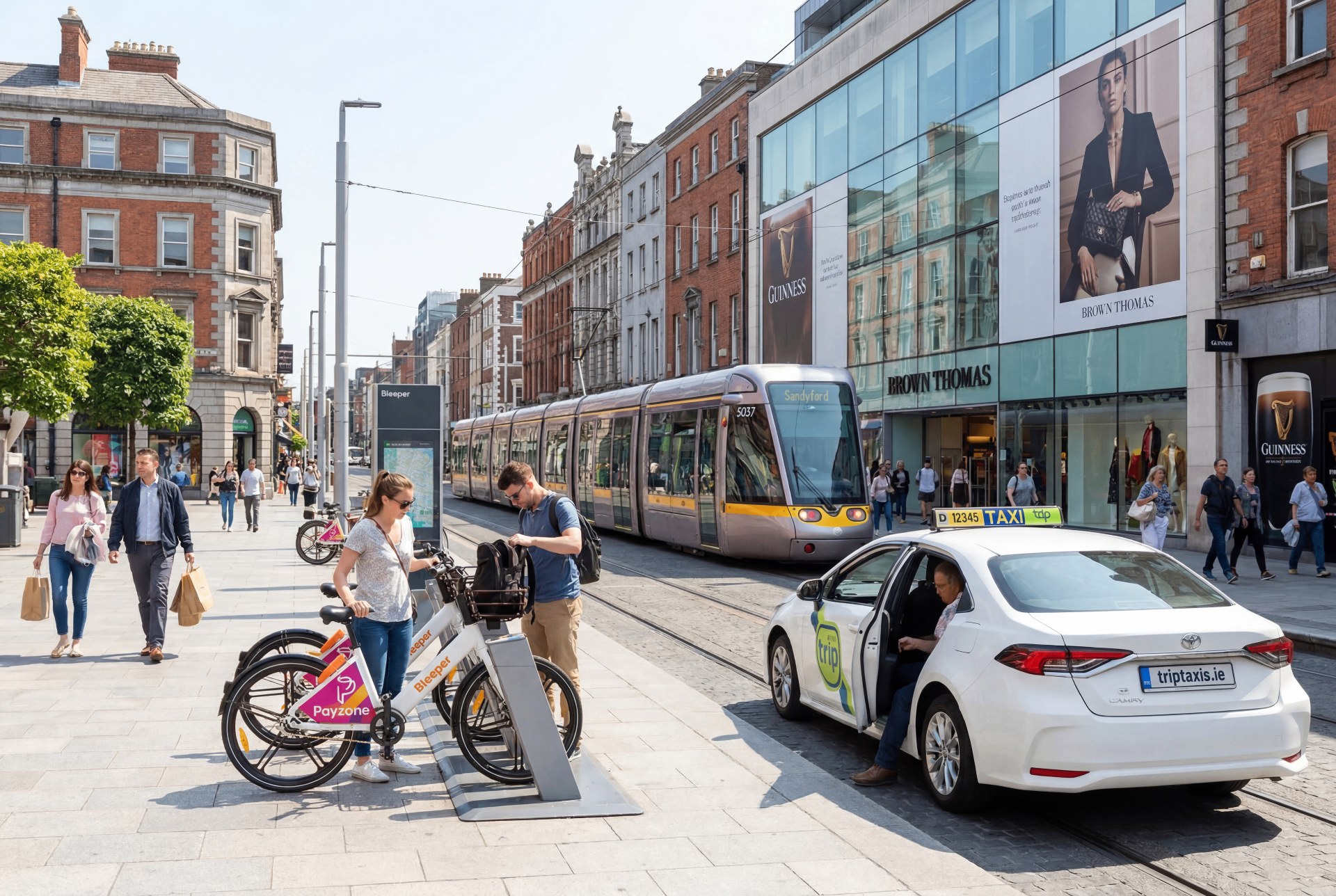
The Evolution of Urban Mobility
For decades, urban transportation has been fragmented. Travellers often need multiple apps, payment methods and tickets to complete a single journey. Whether commuting to work, travelling across a city or planning a day out, navigating different transport providers can be frustrating and inefficient.
Mobility as a Service (MaaS) aims to solve this challenge by bringing multiple transport modes together into a single digital platform. Through MaaS, users can discover, compare and access public transport, taxis, bike-sharing, e-scooters, ride-hailing services and other mobility options through one integrated experience.
As cities continue to grow and sustainability becomes a greater priority, MaaS is increasingly being viewed as a key component of the future transport ecosystem.
What is Mobility as a Service?
Mobility as a Service is a digital approach to transportation that integrates various mobility services into a single platform. Rather than focusing on individual transport operators, MaaS places the traveller at the centre of the journey.
The objective is simple: provide users with the most efficient, convenient and sustainable way to move from A to B.
A mature MaaS platform typically offers:
- Journey planning
- Real-time travel information
- Integrated ticketing
- Unified payment systems
- Access to multiple transport providers
- Personalised travel recommendations
By removing barriers between transport services, MaaS creates a more seamless travel experience while encouraging greater use of sustainable transport options.
Helsinki: The Global MaaS Pioneer
When discussing Mobility as a Service, Helsinki is often recognised as the world's leading example.
In recent years, the Finnish capital has become synonymous with MaaS innovation through the development of integrated mobility platforms that combine public and private transportation services within a single application.
The city's vision was ambitious: reduce reliance on private car ownership by making alternative transport options more accessible and convenient.
Through partnerships between transport authorities, technology providers and private operators, Helsinki demonstrated that travellers are willing to embrace integrated mobility solutions when they provide genuine convenience.
Today, Helsinki remains a benchmark for cities seeking to implement MaaS strategies.
Singapore: Integrating Technology and Mobility
Singapore has long been recognised as one of the world's most advanced smart cities.
The city-state has invested heavily in digital infrastructure, intelligent transport systems and real-time mobility data. While its approach differs from Helsinki's, many of the same principles underpin Singapore's mobility strategy.
By leveraging technology, data analytics and integrated transport planning, Singapore has created a highly connected mobility ecosystem that prioritises efficiency, accessibility and sustainability.
The result is a transport network that continually adapts to the needs of its users.
Stockholm and the Push for Sustainable Mobility
In Sweden, MaaS has become closely linked with sustainability objectives.
Stockholm has explored how integrated mobility services can encourage residents to reduce private vehicle usage and adopt more environmentally friendly travel behaviours.
The city's initiatives demonstrate how MaaS can contribute to broader climate goals by supporting public transport, active travel and shared mobility services.
As cities work towards reducing emissions and congestion, MaaS is increasingly viewed as a practical solution rather than a theoretical concept.
The United Kingdom's MaaS Journey
Across the United Kingdom, cities and regions have been exploring various MaaS initiatives aimed at simplifying travel experiences and improving connectivity.
Local authorities have recognised that fragmented transport systems often discourage public transport usage. Integrated mobility platforms offer an opportunity to create more user-friendly transport networks while supporting economic growth and environmental objectives.
Although implementation varies across regions, the UK continues to be an important testing ground for MaaS innovation.
Why MaaS Matters
The benefits of Mobility as a Service extend beyond convenience.
For travellers, MaaS simplifies journey planning and reduces friction throughout the travel experience.
For cities, MaaS can help:
- Reduce traffic congestion
- Increase public transport adoption
- Lower carbon emissions
- Improve transport accessibility
- Support smarter urban planning
For transport operators, integrated mobility platforms create new opportunities for collaboration, data sharing and customer engagement.
As urban populations continue to grow, these benefits are becoming increasingly important.
The Future of Mobility
The next generation of MaaS platforms is expected to be powered by emerging technologies such as artificial intelligence, predictive analytics and real-time mobility data.
These technologies will enable more personalised travel recommendations, improved journey planning and greater operational efficiency across transport networks.
The future of urban mobility is unlikely to be defined by a single mode of transport. Instead, success will depend on how effectively cities connect different transport services into a seamless ecosystem that meets the needs of modern travellers.
Mobility as a Service represents a significant step towards that future.
As cities around the world continue to invest in smarter, more integrated transport systems, MaaS is no longer a vision for tomorrow—it is becoming a reality today.
Sources & Further Reading
- European Commission Urban Mobility Observatory — How Helsinki Became a Mobility as a Service Leader
- World Economic Forum — Future of Mobility Research
- International Transport Forum (OECD) — Mobility as a Service Reports
- MaaS Alliance — Mobility as a Service Frameworks and Best Practices
- Smart Cities Council — Urban Mobility Innovation Research